Dive into the ecosystems that make each national marine sanctuary special: colorful coral reefs, towering kelp forests, living seagrass meadows, and tide-kissed rocky shores. As you explore below, you'll learn what makes each ecosystem unique and worthy of protection, and where to see them across the National Marine Sanctuary System.

Bursting with color and life from the shallows to the deep sea, coral reefs are living structures built by tiny coral polyps that provide shelter and food for thousands of marine species. These vibrant ecosystems protect coastal communities from storm damage, support commercial and recreational fisheries, attract visitors from around the world, and may even hold future medical discoveries within their diverse life forms.

Kelp forests grow predominantly on the Pacific Coast, from Alaska and Canada to the waters of Baja California. Tiered like a terrestrial rainforest with a canopy and several layers below, the kelp forests of the U.S. West Coast are dominated by two canopy-forming, brown macroalgae species, giant kelp (Macrocystis pyrifera) and bull kelp (Nereocystis leutkeana).

These underwater "meadows" of flowering plants stabilize sediment, filter water, and provide critical food for animals such as sea turtles and manatees, and nursery habitat for many commercially and recreationally important fish species.
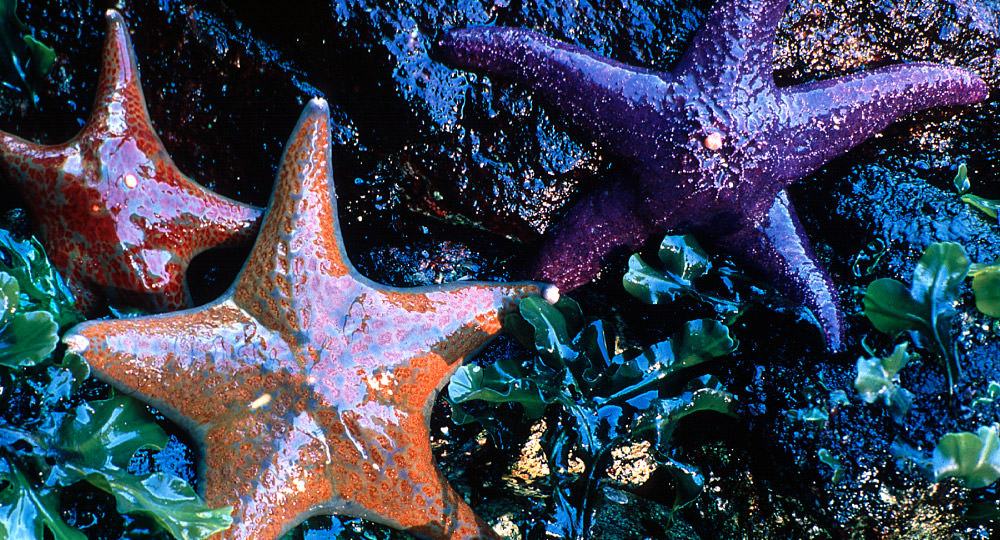
Where land meets the sea, rocky shores, tidepools, and intertidal reefs create dynamic habitats shaped by waves, changing tides, and shifting temperatures. Sea stars, anemones, crabs, mussels, and algae thrive here, each specially adapted to survive periods of crashing surf, exposure to air, and intense sun. These ecosystems provide important feeding and nursery areas for marine life and offer scientists and visitors a rare window into the rich diversity of the ocean’s edge. By studying and protecting intertidal habitats, sanctuaries help conserve species, monitor environmental change, and connect people to one of the most accessible marine environments.

Carved over millions of years, these underwater landscapes descend thousands of feet below the surface. Submarine canyons, continental slopes, and towering seamounts harbor cold-water corals, sponges, and deep-sea fish, forming complex habitats that support some of the ocean's most diverse—and least explored—communities. By studying these remote ecosystems, scientists are uncovering new species, advancing deep-sea technology, and revealing how life in the depths contributes to ocean health and global biodiversity.

Stretching far beyond the coast, the open ocean connects all of Earth's marine ecosystems. This vast, dynamic habitat is home to migratory species such as whales, dolphins, sea turtles, tuna, and seabirds that rely on it for feeding, breeding, and migration. From plankton drifting near the surface to large predators patrolling the depths, life in the open ocean plays a vital role in regulating climate, supporting fisheries, and sustaining the planet's largest ecosystem.

